San Francisco Peace Monuments
Updated: Sep 9, 2025
And the Gregangelo Museum: Top Memorials,
Historic Landmarks, and Hidden Gems

Standing on the bluffs where San Francisco’s Lands End meets the Pacific, the Golden Gate Bridge stretches across the horizon, offering breathtaking views that are both beautiful and sobering. The rhythm of the ocean pounds a distinctive beat on the shores below, reminding us of the shipwrecks of those who never made it to this mythical land of dreams and hope. That foreboding rhythm, now augmented with the blow of foghorns, also recalls the doom that befell the indigenous coastal Ohlone people when ships full of gold seekers forever changed the cultural landscape.
Here on this spot, caught in the tides of history, now stands the California Palace of the Legion of Honor, a designated historic landmark where visitors encounter a space born of grief and remembrance. A monumental gift from sugar heiress Alma Spreckels, the Palace opened on Armistice Day, November 11, 1924, to honor California’s soldiers lost in World War I, serving as a lasting tribute to sacrifice and memory.

In the shadow of this grandiose museum and monument, two other symbolic monuments of peace stand quietly. One is George Segal’s haunting WWII Holocaust Memorial (1984), a commemorative work that forever marks humanity’s capacity for cruelty and resilience. It portrays a lone, emaciated, surviving figure against a backdrop of human corpses arranged in a star-shaped formation, a witness to both horror and survival. Segal’s memorial stands near Rodin’s The Thinker, a stark juxtaposition of philosophy and grief. Unlike grandiose landmarks, this garden feels private and fragile, as if it is still weeping. It is one of San Francisco’s most powerful remembrance monuments, a space where silence speaks louder than words and visitors are drawn into a symbolic memorial of suffering and survival.
Nearby, smaller and easy to miss, stands the Kanrin Maru Japanese Peace Monument (1960), a gift from Osaka, San Francisco’s sister city. It commemorates the first Japanese naval ship to enter the Golden Gate in 1860. Just two decades before its installation, San Francisco’s Japanese community had faced a very different fate. During World War II, families were uprooted from their homes, stripped of dignity and rights, and forced into internment camps within sight of this modest marker. Gifted in friendship, it now stands as a powerful symbol of forgiveness and reconciliation, reminding us that remembrance is not only about pain, that San Francisco is both a city of wounds and of healing, and that memory is personal, not popular.
To me, the contrast is striking. One warns of the abyss humanity can fall into when it forgets, while the other reminds us that nations can meet across oceans in mutual respect. Between them, with the sea breathing in and out, I feel the call to remember clearly, not as nostalgia, but as a responsibility to ensure such atrocities never happen again.

Across the Presidio, Bernard Maybeck’s Palace of Fine Arts, rising like a Roman ruin, tells a different story. Originally designed for the 1915 Panama-Pacific International Exposition as a monument to peace and beauty after the devastation of the 1906 earthquake, it was imagined as a ruin from the ancient past, already broken and already weeping. Maybeck noted that the women carved into its friezes turn their faces away in sorrow, not wishing to see what lies before them.
From my perception, I see more than classical architecture. My eyes are drawn to the liberated caryatids atop the colonnade, the weeping women whose tears fill the urns cascading down the Corinthian columns to nourish the lagoon below. Their pond of tears sustains local flora, from redwoods to ferns and acanthus plants, whose leaves the columns mimic in stone. This place touches everyone who enters its mystical embrace. Life thrives, brides, quinceañera girls, dancers, skaters, artists, and visitors from across the world move through the sanctuary, participating unconsciously in the transformation: grief becomes beauty, sorrow feeds growth.
These weeping women are more than ornamentation. They are guardians of memory and reminders that San Francisco itself is a living memorial of acceptance and liberation. Each bowed head carries both grief and grace, and within their enduring tears lies the seed of forgiveness. Unlike monuments that commemorate war, victory, or prestige, this one channels sorrow into healing. It is a space where grief is acknowledged, transformed, and gently released, a monument that quite literally weeps away the sorrows of the world.
A little personal note: once, when sharing my story of the weeping women with my partner, we stood at the base of the colonnade looking up. Being from France, the land of Liberté, Égalité, Fraternité, I thought the story would resonate. Without hesitation, he looked up and said, “It looks like they are vomiting.”

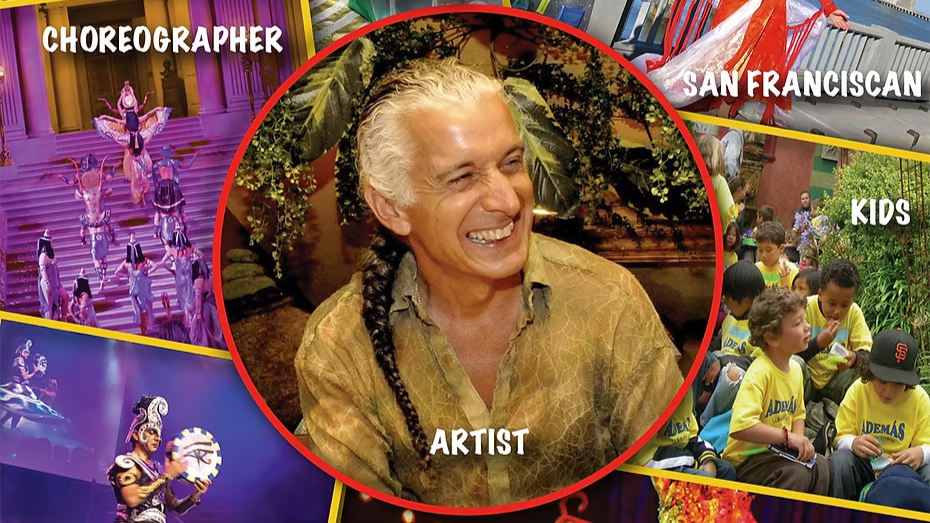
Meanwhile, the Gregangelo Museum, an immersive house museum and designated San Francisco Landmark and Legacy Business, is an intimate abode that hardly looks like a monument, yet its impact on the human spirit is palatial. Built not by decree but through grief slowly transmuted over time, the Museum unfolded along the five stages of grief—denial, anger, bargaining, depression, and acceptance—and now stands rooted in resilience and compassion. Each room is an immersive installation where silence, humor, art, and ritual weave into a living memorial that transcends words. Unlike many commemorative monuments devoted to war and power, this small landmark offers a sanctuary of joy and remembrance, with a permanent Day of the Dead altar where visitors commune with their ancestors. The house is ever-evolving as artists from around the world, including those from rival nations, collaborate to create beauty, reminding us that this museum is not political but a monument to peace, hope, and the enduring power of human connection.
In San Francisco, monuments along the Pacific rim keep us honest: the California Palace of the Legion of Honor and George Segal’s Holocaust Memorial confront sacrifice and atrocity, the Palace of Fine Arts mourns with its weeping women, and the Kanrin Maru Japanese Peace Monument offers a symbol of forgiveness. Alongside them, the Gregangelo Museum, an immersive house museum and San Francisco Historic Landmark, transforms sorrow into joy, a sanctuary where remembrance is personal, not popular. Together, these places remind us that the most powerful memorials are not only carved in stone but also born of compassion, creativity, and the courage to remember, where grief becomes grace and beauty endures.
So travel, explore, and be curious, and through those experiences, you will inevitably learn to love and accept. It is far easier and feels far better than living in isolation, fear, misinformation, loneliness, or hate.
Summed up in one profound quote by one extraordinary artist:
“The more I traveled, the more I realized that fear makes
strangers of people who should be friends.”
– Shirley MacLaine –
And from my perspective:
“I read, I explore, I listen and observe. But more than anything, I experience and accept everything that life brings to me… but always with questions.”
– Gregangelo –
From iconic landmarks to hidden gems, San Francisco Peace Monuments remind us that this city is not only a place of beauty and creativity, but also of compassion and reflection.